Natasha Roque Blog
Yesterday’s workout felt great. Today, the stairs are a challenge, sitting down hurts, and another training session is already on your schedule.
Should you train through the soreness, work a different muscle group, choose active recovery, or rest?
Mild muscle soreness does not always require a day off. However, sharp, localized, worsening, or movement-altering pain deserves more caution.
Here is a simple way to decide what your body needs.
Important: This article provides general educational information. It is not a diagnosis or a substitute for care from a licensed healthcare professional.
Table of Contents
- Should You Work Out When You’re Sore?
- How Long Does Muscle Soreness Last?
- Soreness vs. Injury
- The Green, Yellow, and Red Light Test
- What to Do Between Strength-Training Days
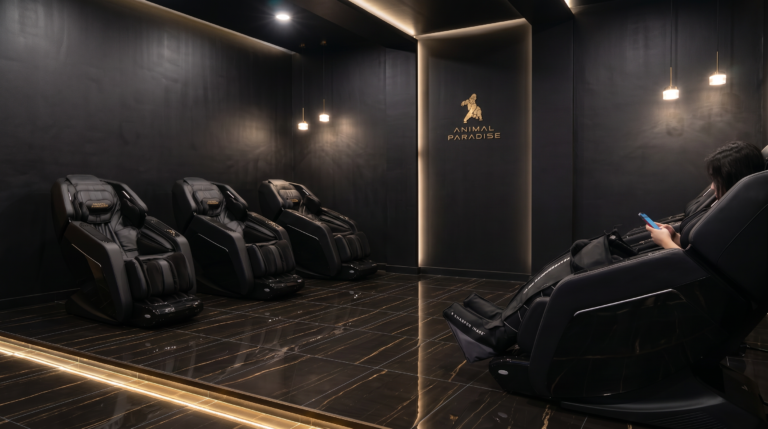
- Yoga, Massage Chairs, and Compression Boots
- When to Seek Professional Help
- Recovery at Animal Paradise Gym
Should You Work Out When You’re Sore?
You can often exercise with mild soreness if you can move normally, maintain proper technique, and warm up without feeling worse.
You may need to modify or skip the workout if soreness causes you to:
- Shorten your range of motion
- Shift your weight or limp
- Lose control of the movement
- Compensate with another part of your body
- Experience increasing pain as you warm up
The decision should depend on how well you can move, not simply whether you feel sore.
How Long Does Muscle Soreness Last?
Delayed-onset muscle soreness, commonly called DOMS, often develops after a new or unusually demanding workout.
It commonly peaks between 24 and 72 hours after exercise before gradually improving.
Normal DOMS may include:
- A dull ache across the muscles trained
- Tenderness when the muscle is pressed
- Stiffness after sitting or sleeping
- Temporary difficulty using your usual range of motion
Soreness is not required for progress. A workout can be effective even if you are not sore the following day.
Soreness vs. Injury: What’s the Difference?
Ordinary soreness is usually spread across a muscle or muscle group. Possible injury pain is more likely to be sharp, sudden, localized, or connected to a particular movement.
Normal soreness may feel like:
- A dull or aching sensation
- General stiffness
- Tenderness across the muscles trained
- Discomfort that improves with gentle movement
- Symptoms that gradually improve over several days
Possible warning signs include:
- Sharp, stabbing, burning, or electric pain
- Pain inside or around a joint
- Sudden pain during a repetition
- Swelling, bruising, redness, or unusual warmth
- Numbness, tingling, or weakness
- Pain that changes how you walk or lift
- Symptoms that continue getting worse
You do not need to diagnose yourself. You only need to recognize when pushing through may not be the right decision.
The Green, Yellow, and Red Light Recovery Test
Use this quick check before your next workout.
Green Light: Move
Your soreness is mild and your movement remains normal.
You can walk comfortably, use your normal range of motion, and perform a bodyweight version of the exercise with control.
Consider:
- Training a different muscle group
- Using lighter weights
- Walking or easy cardio
- Yoga or mobility work
Yellow Light: Modify
Your soreness is affecting your strength, mobility, or technique.
Your normal weight feels unusually heavy, your warm-up is difficult, or you are compensating to complete movements.
Reduce the weight, repetitions, sets, or intensity. You can also replace the workout with active recovery.
Red Light: Stop
You have sharp or worsening pain, joint pain, instability, swelling, weakness, numbness, or altered movement.
Stop repeatedly testing the painful area. Consider an evaluation from a licensed physical therapist, physician, or another qualified healthcare professional.
What Should You Do Between Strength-Training Days?
Recovery days do not always require complete inactivity.
If you are only experiencing ordinary soreness, active recovery can keep you moving without adding another demanding workout.
Options include:
- Walking
- Easy cycling
- Gentle mobility exercises
- Yoga
- Breathing and relaxation work
- Light training for a different muscle group
Active recovery should feel easier than your normal training. If it leaves you exhausted, it is no longer functioning as recovery.
Complete rest may be better if you are sick, severely sleep-deprived, unusually exhausted, unable to move normally, or experiencing pain rather than soreness.
Is Yoga Good for Sore Muscles?
Yoga combines controlled movement, mobility, balance, breathing, and relaxation. That makes it a useful option between strength-training days.
It may help you:
- Move stiff areas comfortably
- Practice mobility
- Improve balance and body awareness
- Add lower-intensity movement to your week
- Relax after demanding training
Yoga is not an instant cure for muscle soreness. Its value comes from providing movement and mobility without repeating the stress of another heavy workout.
Animal Paradise Gym members can attend Yoga every Tuesday at 7:00 p.m.
Reservations must be made in advance by calling the gym or visiting the front desk.
Can Massage Chairs and Compression Boots Help?
Massage chairs and compression boots may support relaxation and short-term comfort after training. They should complement the foundations of recovery rather than replace them.
Massage Chairs
A massage chair uses mechanical movement and pressure. Some people use it to relax or reduce the temporary feeling of muscle tightness after exercise.
Choose a comfortable setting and stop if you experience pain, numbness, dizziness, or unusual discomfort.
Leg-Compression Boots
Compression boots inflate and release around the legs. Athletes commonly use them after leg training, running, sports, or long periods on their feet.
Some people report that their legs feel lighter or more relaxed afterward. However, research on accelerated athletic recovery remains mixed.
There is no universal number of weekly sessions. Follow the equipment instructions, begin conservatively, and pay attention to how your body responds.
People with blood clots, circulation problems, substantial swelling, cardiovascular conditions, open wounds, recent surgery, or other medical concerns should consult a healthcare professional before using compression boots.
When Should You Seek Professional Help?
Consult a qualified healthcare professional if you experience:
- Persistent or worsening pain
- Significant swelling or bruising
- Loss of strength or function
- Numbness or tingling
- Joint instability
- Inability to bear weight
- Pain that repeatedly returns during the same movement
Seek urgent medical attention for severe symptoms such as chest pain, difficulty breathing, extreme swelling, profound weakness, or dark-colored urine after intense exercise.
Recovery at Animal Paradise Gym
Training hard and recovering well should be part of the same routine.
Animal Paradise Gym members can use the Hibernation Room, featuring massage chairs and leg-compression boots for post-workout relaxation.
Members can also attend Tuesday Yoga at 7:00 p.m. for controlled movement, mobility, breathing, and active recovery. Advance reservations are required by phone or at the front desk.