Natasha Roque Blog
You just finished your workout.
Now what?
Should you drink a protein shake immediately? Is it okay if you wait an hour? Do you need carbohydrates? Will eating fat ruin your recovery? Are supplements necessary?
There is more misinformation about post-workout nutrition than almost any other topic in fitness.
Let’s separate the myths from what actually helps your body recover and build muscle.
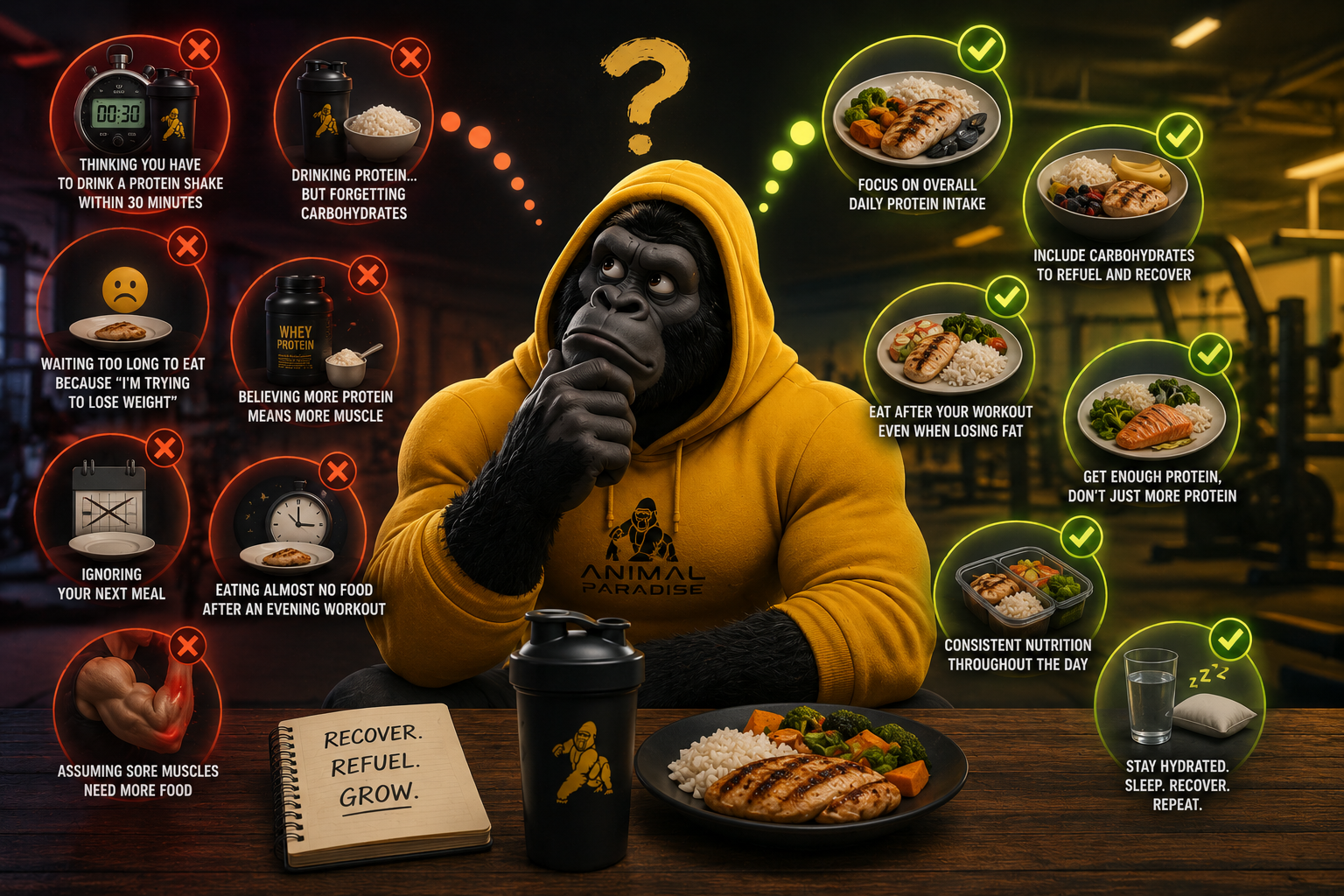
1. Thinking You Have to Drink a Protein Shake Within 30 Minutes
You’ve probably heard about the famous “anabolic window.”
The idea is simple: if you don’t get protein immediately after training, you lose your chance to build muscle.
Thankfully, that’s not true.
Research now shows that the anabolic window is much larger than people once believed. If you ate a balanced meal a couple of hours before training, your body is still digesting and absorbing those amino acids during your workout.
That means you don’t need to panic if your shake has to wait until you get home.
The real goal isn’t drinking protein within 30 minutes.
It’s getting enough high-quality protein across your entire day.
Takeaway: Stop racing to the locker room with your shaker bottle. Daily protein intake matters far more than the exact minute you drink it.
2. Drinking Protein… But Forgetting Carbohydrates
Protein gets all the credit.
Carbohydrates quietly do a lot of the work.
After resistance training, your muscles begin replenishing glycogen—the stored carbohydrate that fuels hard workouts.
If you’re training again tomorrow, playing sports, or doing high-volume lifting, replacing some of those carbohydrates helps prepare your body for the next session.
3. Waiting Too Long to Eat Because “I’m Trying to Lose Weight”
One of the biggest mistakes people make during a fat-loss phase is avoiding food after the gym because they don’t want to “undo” the calories they just burned.
The problem?
Your body still needs nutrients to recover.
Skipping your post-workout meal often leaves people extremely hungry later in the evening, making it much easier to overeat.
Eating after your workout doesn’t erase your calorie deficit.
Your total calorie intake for the day is what matters most.
4. Believing More Protein Means More Muscle
If some protein is good, more must be better…
Right?
Not exactly.
Your body can only stimulate muscle protein synthesis to a certain point from a single meal. Eating 80 grams of protein at once isn’t necessarily better than eating 30–40 grams and spreading your intake throughout the day.
Think of protein like watering a plant.
Dumping an entire week’s worth of water on it today doesn’t make it grow faster.
Consistent watering does.
The same idea applies to your muscles.
5. Ignoring Your Next Meal
Many people obsess over the post-workout shake…
…then eat almost no protein for the rest of the day.
Your muscles don’t stop recovering after one meal.
Muscle protein synthesis remains elevated for many hours after resistance training.
That means lunch, dinner, and even tomorrow’s breakfast all contribute to your recovery.
The best recovery plan it’s several good meals.
6. Eating Almost No Food After an Evening Workout
This is surprisingly common.
People train at 7 or 8 p.m., drink a shake, and avoid dinner because they think eating late causes fat gain.
It doesn’t.
Your body doesn’t suddenly stop using nutrients because the sun went down.
If you’ve just completed a demanding workout, your muscles still need protein, carbohydrates, and total calories regardless of the time on the clock.
The quality and quantity of what you eat matter far more than whether it’s 6 p.m. or 9 p.m.
7. Assuming Sore Muscles Need More Food
Feeling sore doesn’t necessarily mean you need to eat dramatically more.
DOMS (Delayed Onset Muscle Soreness) is usually a sign that your muscles are adapting to a new or challenging stimulus, not that you need to double your protein intake.
Focus on your normal recovery routine:
-
- Eat enough protein.
-
- Include quality carbohydrates.
-
- Stay hydrated.
-
- Sleep well.
Consistency beats trying to “fix” soreness with one giant meal.